

Virtual Reality Rehabilitation Apps
-
StarGait
Walking-based AR for weight shifting and gait progression.
-
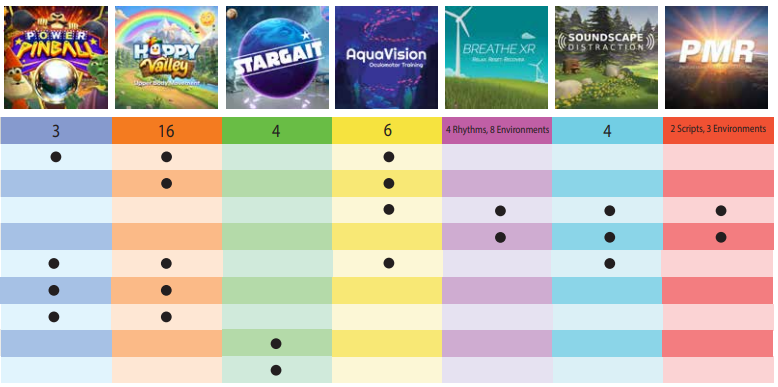
Rehab Areas
See how our applications support each area of rehab.
-
Power Pinball
Dynamic, movement-based XR interaction.
-
AquaVision: Oculomotor Training
Immersive visual-motor engagement.
-

Breathe XR
Guided breathing sessions in immersive environments
-

PMR
Structured full-body progressive muscle relaxation
-
Soundscape Distraction
Immersive ambient environments for focused sensory engagement
-
Happy Valley
Upper extremity movement, trunk control, and interactive cognitive engagement.
Clinically designed VR therapy applications for physical therapy, neuro rehabilitation, and patient engagement.
AVRwell develops immersive virtual reality rehabilitation applications designed for clinicians and healthcare organizations. Our XR therapy apps combine evidence-based rehabilitation principles with engaging interactive experiences that support neurological recovery, patient motivation, and functional training.
What Sets AVRwell Apart
At AVRwell, we design our rehabilitation applications with the clinician and patient in mind. Our apps feature:
Built-in progression that adapts to each patient’s journey, ensuring continued challenge and growth.
Simple, intuitive interfaces that require minimal setup, allowing therapists to spend more time on care—not troubleshooting.
Engaging, game-like experiences that motivate patients to participate fully in their treatment.
Each activity concludes with immediate patient feedback, fostering encouragement and reinforcing success. This feedback also provides therapists with meaningful data to document and demonstrate patient progress across sessions.
Clinicians have the flexibility to curate a catalog of applications tailored to their practice, making it both affordable and scalable. Whether you're a solo provider or part of a larger clinic, AVRwell helps you stay tech-forward, offering modern tools that enhance patient care while keeping operational demands low.

Full AVRsuite Roadmap (Release 2026)
-
Virtual Athletic Club
3 activities that strengthen upper extremities and trains reaction speed.
-
Mindful Market
Cognitive Activities of Daily Living (ADL) and functional tasks with secondary benefits of balance and stability. Includes 3 activities - Sandwich Shop, Harvest Helper, and Stamp Stand.
-
Undersea Adventures
Focuses on lower body strengthening, upper extremity engagement, mobility, and relief from chronic pain. Includes 4 activities with 15 focused exercises.
-
Shower Sanctuary
Showering ADL activity. a seated, guided VR activity designed to help patients practice the full sequence of the bathing ADL (Activity of Daily Living) in a supportive, calming environment.
-
Serene Lake
6 Cognitive activities to help train memory, attention, and executive functioning.
-
Pleasant Cove
5 unique activities that focuses on Upper extremity reaching, core stability, cognitive functions, and education of activities of daily living tasks.
Why Use Virtual Reality in Rehabilitation?
Virtual reality rehabilitation allows therapists to deliver engaging, repeatable exercises that promote neuroplasticity and patient participation. By combining immersive environments with goal-directed movement, VR therapy applications can increase motivation, encourage repetition, and support functional recovery across neurological and orthopedic rehabilitation